
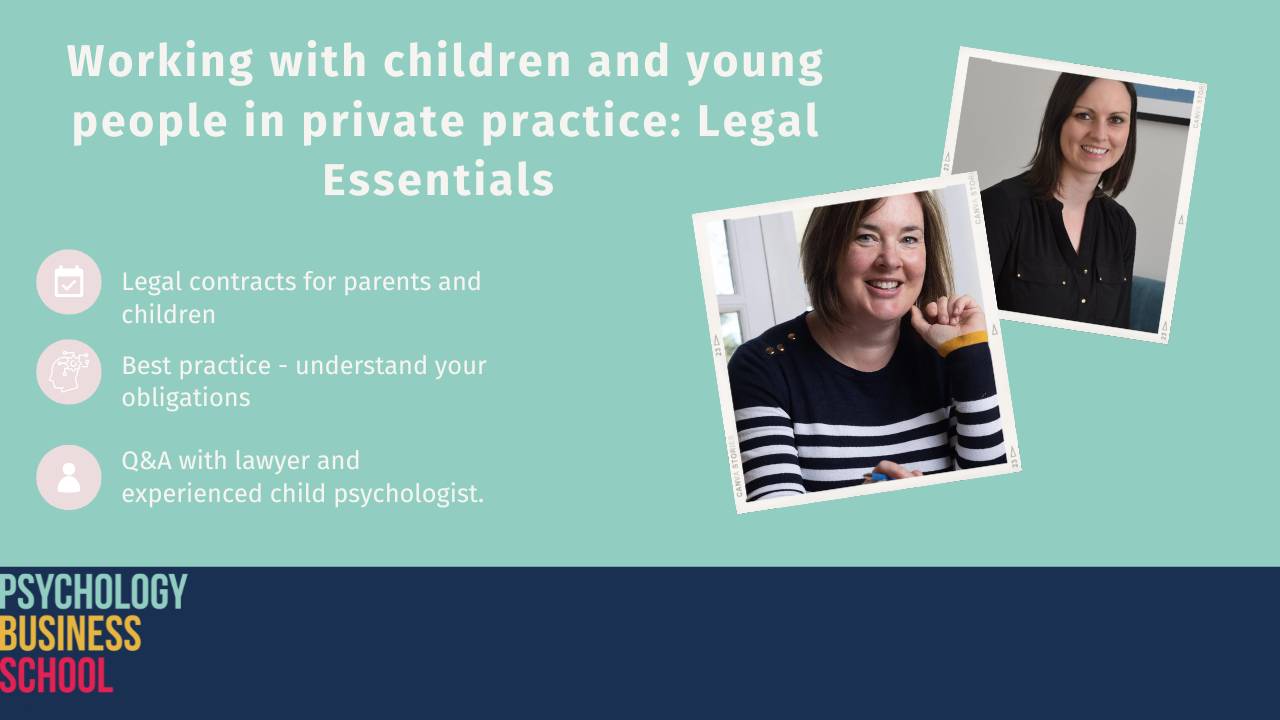
Legal essentials for working with children and young people in independent practice
Welcome children and young people into your practice with confidence
Do you want to work with children or young people in your practice but worry that your existing documents don’t quite fit when parents are involved? What do you do when a child can’t understand your normal therapy contract?
It is your clinical responsibility to gain informed consent where possible and your legal duty to ensure consent is collected and data shared in the right way. This can feel like a minefield in independent practice but never fear, many psychologists and therapists have trodden this path before you and we are bringing you up to date advice and templates from experts.
What's included:
✔️ Welcome Guide - to help you navigate all the documents in the pack and understand when to use each one
✔️ Guidance Note - explaining the legal requirements for working with children, including parental consent, Gillick competence, and the Children's Code
✔️ Child Friendly Therapy Terms Template - terms and conditions written in child-friendly language for your young clients to understand
✔️ Therapy Terms for Parents Template - adapted contract to set clear payment expectations, communication and data-sharing boundaries with parents and guardians
✔️ Child Friendly Privacy Policy Template - explaining data protection in clear, simple language designed for children
✔️ Psychology Safeguarding Policy - a comprehensive policy to protect children and vulnerable adults in your practice
✔️ Child Friendly Therapy Information & Privacy Rights Video - a short video you can show to children to help them understand their rights and gain informed consent
✔️ Child Friendly Explanatory Sheet - to help children understand who you are and what to expect during therapy (available in primary and secondary age versions)
✔️ Child Friendly AI Guidance and Consents - if you use AI tools in your work with children
✔️ Neurodivergent Children Comic Strips - two visual guides explaining therapy sessions and assessments in an accessible, reassuring format for neurodivergent children